Wine and Food Waste Accused by Vigilante in Supermarket Clash
The Rise of the Food Waste Inspector
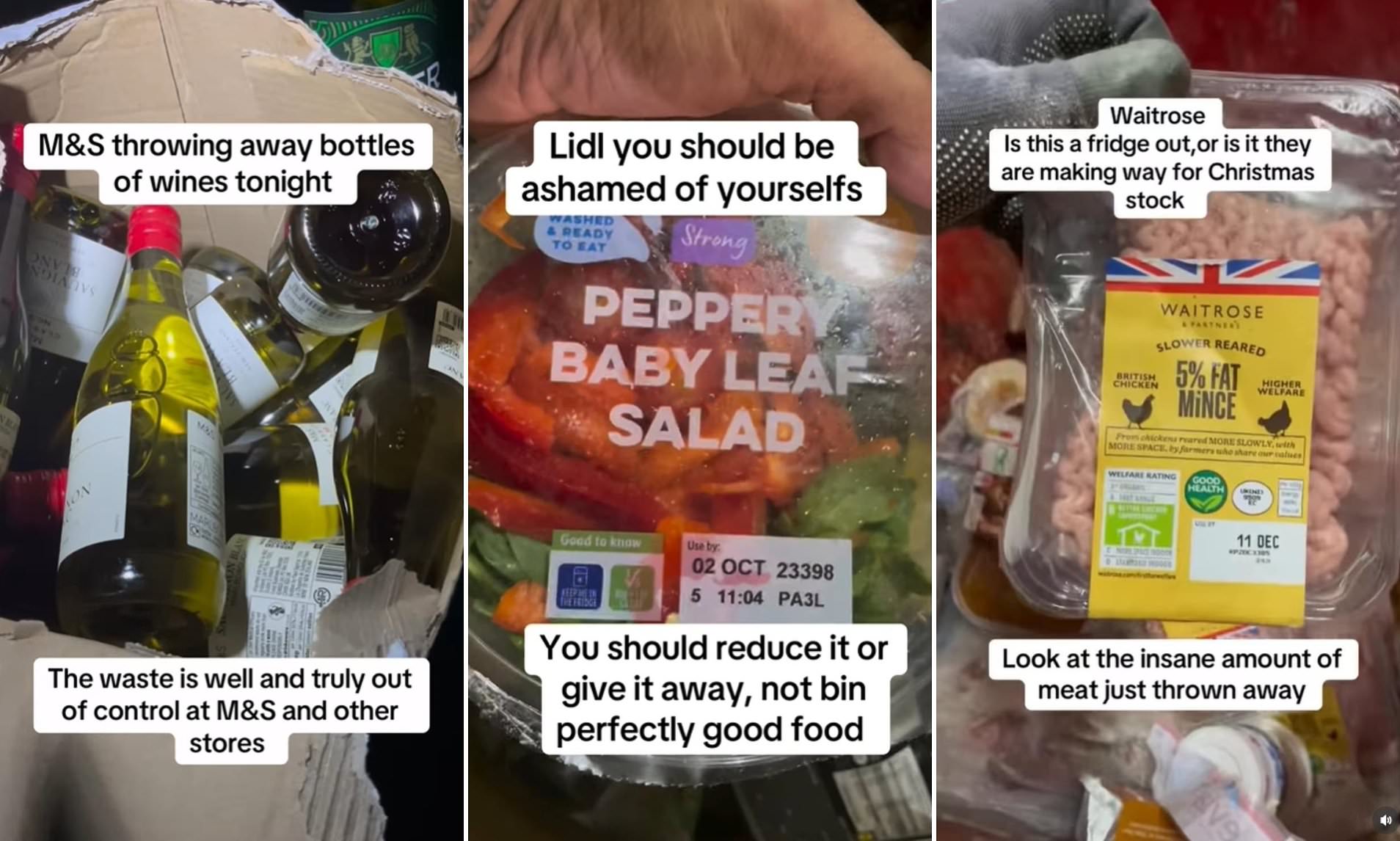
A mysterious figure known as the Food Waste Inspector has been making headlines by exposing what he claims are instances of food waste at major UK supermarkets. This anonymous individual, who has gained a large following on social media platforms like Instagram and TikTok, has been filming his findings in bins behind stores such as Lidl, Marks and Spencer (M&S), and Waitrose. His videos have sparked conversations about food waste and the responsibility of supermarkets to donate unsold goods.
Uncovering Food Waste
In one of his videos, the Food Waste Inspector discovered an entire box of unspoiled white wine behind an M&S store. He described the bottles as "brand new and sealed," with some having sell-by dates that extended into 2024. He also found tins of food that were still edible but had been discarded, along with bakery products that could have been donated to charity. These discoveries have raised questions about the practices of these major chains.
The inspector’s efforts have resonated with many, leading to thousands of followers on social media. While he has revealed his face in some videos, he prefers to remain anonymous, using only the pseudonym "food_waste_inspector." His videos often highlight the discrepancy between what supermarkets claim about their food donation policies and what is actually happening behind the scenes.
Supermarkets Respond
Supermarkets like M&S and Waitrose have responded to the allegations, stating that they are working to address the issue. M&S has pledged to ensure that 100% of edible food ends up on someone's plate by the end of 2025. The company has also reached out to the Food Waste Inspector to understand where things might be going wrong. In a statement, M&S mentioned that it is investigating specific cases and checking with its stores to ensure proper handling of surplus food.
Waitrose has also addressed the issue, explaining that some of the meat found in bins was not fit for human consumption due to being out of cold storage for too long. However, the company emphasized its commitment to tackling food waste, citing its record of donating the equivalent of 31 million meals to Fareshare.
Other Chains Under Scrutiny
The Food Waste Inspector has not limited his investigations to just the big names. He has also visited pharmacies like Boots, where he found sandwiches and other items that were not marked down despite approaching their use-by dates. He criticized the lack of action, calling it "pure laziness."
Budget supermarkets like Lidl have also come under scrutiny. The inspector has documented instances where fresh meat, flowers, and even power tools were thrown away. One video showed a bin full of freshly baked pastries, which should have been donated according to Lidl’s policies. The supermarket has since taken steps to investigate the videos and ensure that proper procedures are followed.
Industry Response
Neighbourly, a partner organization that works with M&S and Lidl to distribute surplus food, has acknowledged the importance of the Food Waste Inspector's work. However, they emphasize that the videos represent only a small portion of the food that is not donated. Steve Butterworth, CEO of Neighbourly, stated that the organization strives to support its network in making redistribution efficient while prioritizing health and safety.
Lidl has also responded to the allegations, stating that it has distributed millions of meals to over 2,800 good causes. The company is investigating the videos and working closely with regional management teams to ensure that all staff are aware of the proper procedures for donating surplus items.
Conclusion
The Food Waste Inspector's actions have brought attention to the issue of food waste in the retail sector. While some supermarkets have taken steps to address the problem, the inspector continues to highlight areas where improvements are needed. As more people become aware of the issue, there is hope that these discussions will lead to meaningful changes in how supermarkets handle their surplus food.
Post a Comment