Subway Cup Ramen Sparks Global Debate
The Controversy of Eating on Subways
A recent incident involving a passenger eating cup ramen on a subway has sparked significant online debate. While complaints about eating on subways are common, with up to 1,000 cases reported annually, there is currently no legal framework in place to prohibit or penalize such behavior.
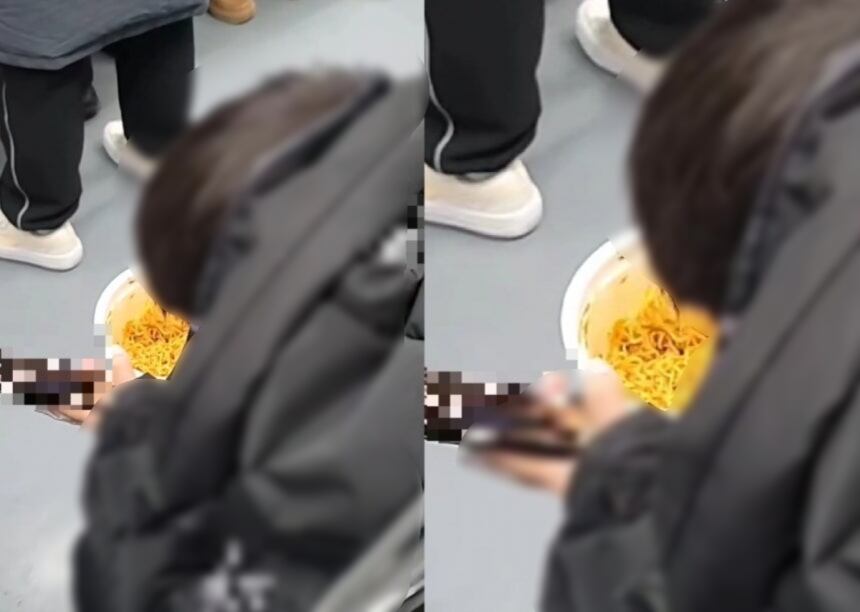
On the 27th, a video circulated on social media and online communities showing a passenger—believed to be a student—eating cup ramen while watching a mobile phone on Incheon Subway Line 1. The individual was seen juggling both tasks, with the ramen container held precariously between their fingers. The smell of the meal filled the car, prompting some passengers to express their frustration.
One viewer, who filmed the scene, commented, “How busy can one be to board while holding ramen? You have to watch your phone and eat ramen at the same time.” This sentiment reflects the growing concern among commuters about public etiquette and comfort.
This is not the first time such an incident has occurred. In November of last year, a passenger on Seoul Subway Line 2 faced backlash for eating bossam and kimchi while seated. According to reports, the individual continued eating despite the stares from others and even dropped food items onto the train floor.
Over the past five years, from 2021 to September of last year, a total of 4,197 complaints related to eating food on subways were recorded. These complaints covered a wide range of foods, including strong-smelling items like gimbap, sundae, and sweet potatoes, as well as cup ramen, dumplings, squid, canned beer, and bentos. Many complainants described the experience as distressing, with some stating that the smell was so overwhelming they felt like vomiting.
While Article 34 of the Seoul Metro Corporation Passenger Transport Regulations prohibits bringing items into trains that are “unclean or likely to cause discomfort due to odor,” there is no explicit clause prohibiting eating itself. This lack of clear regulation has led to repeated complaints from passengers, who note that even after announcements, people continue eating without any intervention. Some individuals wear earphones, making announcements ineffective, while others manage to disembark before any action can be taken.
In contrast, eating food is strictly prohibited on Seoul city buses. This rule stems from an ordinance revised in 2018 that banned the consumption of food and beverages. Council member Yoon Young-hee highlighted that while the initial implementation of this rule was controversial, it has now become part of citizens’ daily awareness. She suggested that the subway system should also consider reviewing its policies on food and alcohol consumption by gauging public opinion.
Internationally, several major cities have implemented strict measures against eating on subways. In Singapore, for example, fines of up to 500 Singapore dollars (approximately 500,000 Korean won) are imposed for consuming food on subways. Hong Kong enforces fines of 2,000 Hong Kong dollars (around 350,000 Korean won) for similar violations.
The ongoing debate highlights the need for a comprehensive approach to address the issue of eating on subways. As public transportation continues to grow, ensuring a comfortable and respectful environment for all passengers remains a critical challenge.
Post a Comment