SK Hynix and Samsung Aim for 80% HBM Dominance
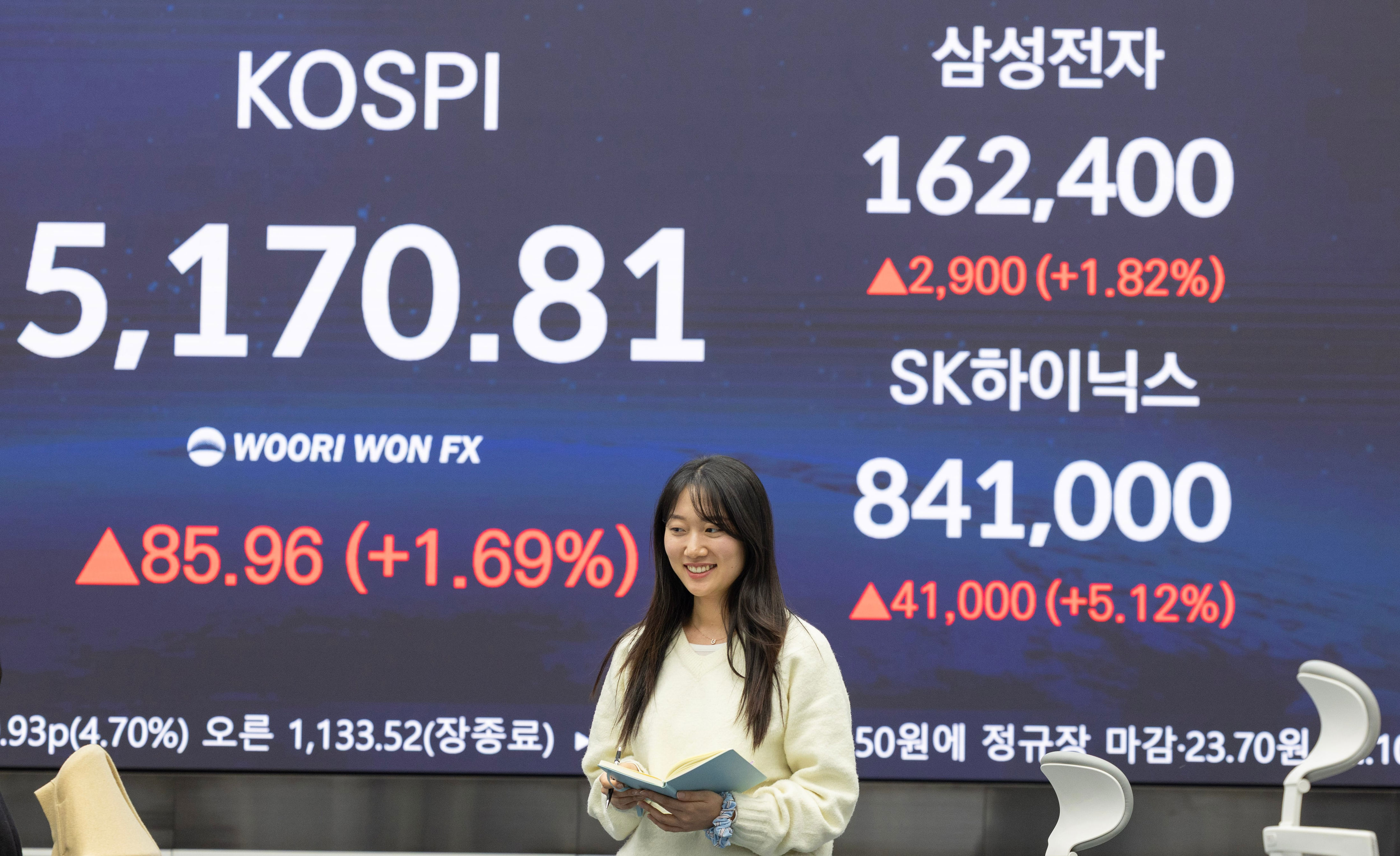
Record-Breaking Performance in the Semiconductor Sector
SK Hynix has experienced a remarkable transformation, achieving unprecedented sales and operating profits over three consecutive quarters. The company's 2025 financial results mark the highest levels in its history. Just a few years ago, SK Hynix was struggling with quarterly operating losses in the trillions of won, but it has since made a dramatic recovery, driven by the rise of the AI era.
Historically, SK Hynix had been the second-largest player in the global memory semiconductor market. However, last year, the company surpassed Samsung Electronics for the first time in terms of operating profit, recording 47.2063 trillion Korean won compared to Samsung’s 43.53 trillion won. Additionally, SK Hynix achieved an impressive operating profit margin of 58%, significantly higher than Samsung’s 21.5% and TSMC’s 54%. To reward its shareholders, the company allocated an additional 1 trillion won in dividends and plans to retire treasury stocks worth 12.2 trillion won (15.3 million shares).
Stronger Performance Expected This Year
The company's outstanding performance is largely attributed to its fifth-generation High Bandwidth Memory (HBM3E), which holds a dominant 55% global market share. Last year, SK Hynix’s HBM market share was double that of Samsung Electronics, which held 27%. The recent surge in general memory prices has further boosted profitability. As global semiconductor companies shift their production lines from DRAM to HBM, a shortage in memory supply and rising prices—referred to as "chipflation"—have persisted. According to DRAM Exchange, DRAM prices rose by 258% and NAND flash prices by 84% over six months.
This year, SK Hynix is expected to see even greater improvements. The continued shortage in general memory supply is anticipated to drive significant revenue growth as companies increase their prices. According to IBK Securities, SK Hynix’s DRAM supply price is projected to rise by 62.8% and NAND flash by 58.8% compared to last year. Industry analysts estimate that SK Hynix’s operating profit this year could more than double last year’s figure, reaching between 100 trillion and 150 trillion Korean won.
Intense Competition for HBM4 Begins
The semiconductor industry and investors are closely watching the development of the sixth-generation HBM4 from SK Hynix and Samsung Electronics. Recently, Samsung announced that it will begin supplying HBM4 to NVIDIA next month, signaling a rapid recovery in its HBM technology and marking the start of full-scale competition between the two companies. Samsung claims to have achieved an industry-leading data transfer speed of 11.7Gbps for HBM4. With U.S. Micron failing to meet NVIDIA’s requirement of over 10Gbps, the HBM4 market is expected to become a two-horse race between SK Hynix and Samsung.
Industry speculation suggests that SK Hynix’s HBM4 may face delays in meeting NVIDIA’s required speed, potentially allowing Samsung to capture more of NVIDIA’s orders. However, a source within the semiconductor industry stated, “SK Hynix has met all of NVIDIA’s speed requirements and has confirmed no issues in the final stages. Volume agreements for this year have already been finalized, and SK Hynix is expected to remain the largest supplier for HBM4.” SK Hynix reportedly achieved speeds comparable to Samsung’s HBM4 and has established a mass production system for NVIDIA supply, entering actual production.
According to a December analysis by UBS, SK Hynix is expected to supply 70% of the HBM4 for NVIDIA’s next-generation Rubin GPU. Notably, SK Hynix’s HBM4 is known for higher yield rates compared to Samsung’s, leading industry experts to believe it will offer better profitability. A tech industry official remarked, “The key point to watch this year will be SK Hynix maintaining its market share and Samsung’s technological counterattack in the next-generation HBM4 market.” South Korean semiconductor companies are expected to capture 80% of the HBM market this year.
Post a Comment