Oxford's New Entrance Exams: Can You Pass the Quiz?
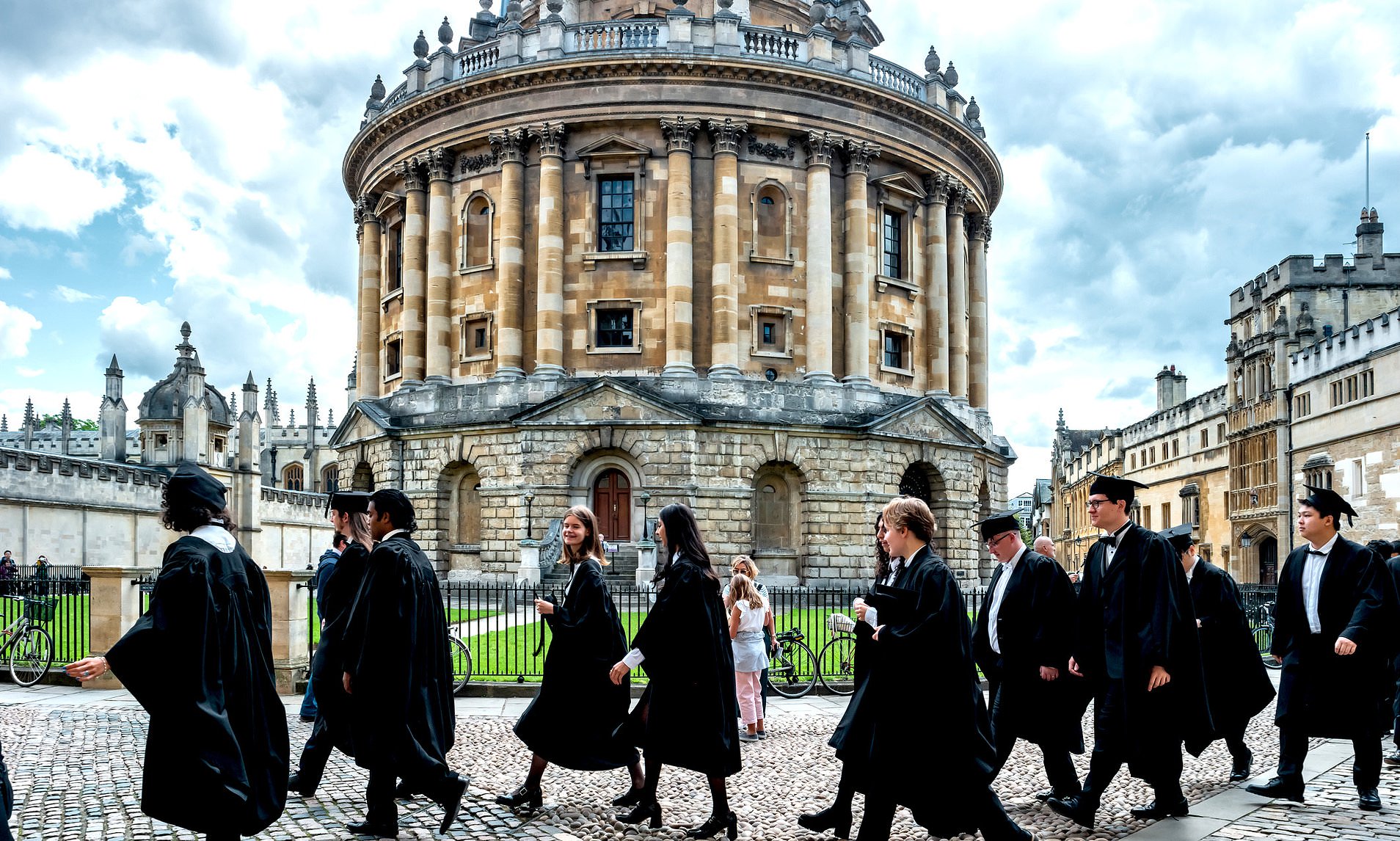
Changes to Oxford’s Entrance Exams
Oxford University has made a significant shift in its entrance process by replacing its traditionally challenging exams with more standardized tests used by other institutions. This change aims to simplify the application procedure for prospective students and make it more accessible.
The new exams are designed to maintain the same level of academic rigor as the previous ones, but they will allow applicants to use a single test for multiple universities. This move is expected to reduce the burden on students and create a more streamlined admissions process.
For humanities subjects, the Test of Academic Reasoning for Admissions (TARA) has been introduced. This test evaluates problem-solving and critical thinking skills, which are essential for disciplines such as history, politics, and economics. Meanwhile, students applying for mathematics and science courses will take either the Engineering and Science Admissions Test (ESAT) or the Test of Mathematics for University Admission (TMUA).
The decision to replace Oxford's bespoke entrance exams comes as part of an effort to promote inclusivity and encourage applications from students in disadvantaged backgrounds. In 2019, Oxford committed to a 'sea-change' in admissions, aiming to increase the number of students from deprived areas.
Evelyn Pike, an expert in Oxbridge applications, emphasized that while the new tests may appear more standardized, they are not necessarily simpler. She noted that these assessments are designed to go beyond rote learning, focusing instead on intellectual flexibility and reasoning abilities.
David Gibbon, director of Oxford and Cambridge Tutors, believes that removing some of the unique aspects of the application process could benefit candidates who are less familiar with Oxford’s admissions procedures. However, he also warned that this change might result in the loss of highly regarded subject-specific assessments that have provided a higher level of challenge compared to other tests.
Professor Anthony Glees, a security expert at Buckingham University, expressed concerns about the potential impact on Oxford’s ability to select students who are particularly suited to the university. He argued that the uniqueness of Oxbridge, especially in terms of the tutor relationship, could be compromised if the application process becomes too generic.
Oxford’s entrance exams have long been a topic of discussion, even being dramatized in Alan Bennett’s play The History Boys. These exams have undergone various changes over the years, including a period in the 1990s when they were abolished to provide a fairer chance for state-educated pupils. However, they were later reintroduced for many subjects after it became clear that top A-level grades alone were not sufficient to distinguish between good and exceptional candidates.
The new computerized exams are managed by University Admissions Tests UK (UAT UK), a collaboration between Imperial College London and the University of Cambridge. Previously, Oxford applicants took subject-specific tests, but now they will choose from three tests offered by UAT UK.
Gareth Davies, an adviser to potential Oxbridge applicants, pointed out that administering the old tests had become an expensive endeavor for Oxford. On parenting website Mumsnet, many users welcomed the change, seeing it as a positive step towards equity. One user remarked that the Oxford-specific entrance exam likely favored students from schools with strong Oxford connections, rather than those who truly demonstrated merit.
However, some users described the change as a "sad loss," with one adding, "I can’t imagine that the Oxford maths department are very happy."
A university spokesperson emphasized that Oxford’s undergraduate admissions process remains rigorous and is designed to identify academic potential. The university continues to review its admissions practices to ensure they meet the needs of students, schools, and applicants. The process varies by subject and considers a range of factors to assess a candidate’s ability to succeed at Oxford.
Every year, more than 20,000 interviews are conducted for approximately 10,000 applicants, allowing tutors to directly evaluate a candidate’s capacity for independent thinking and engagement with new ideas—qualities that are central to learning at Oxford.
Post a Comment