Flights Grounded as Major Winter Storm Hits US
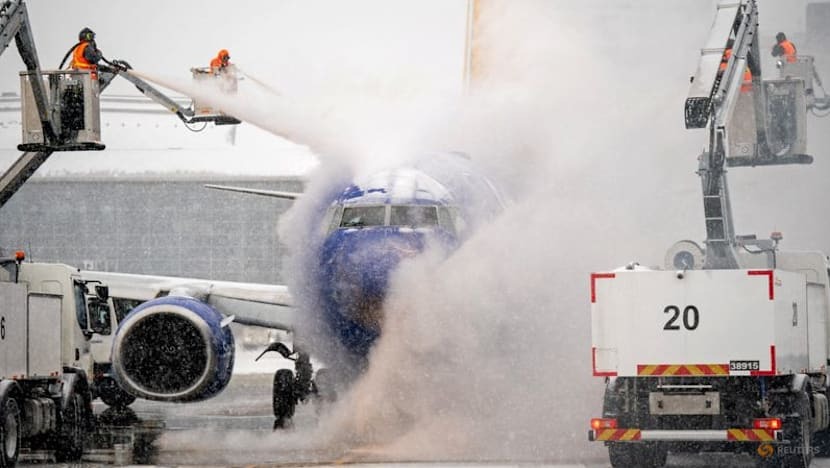
Severe Storm Disrupts Travel and Daily Life Across the U.S.
A powerful storm has swept across the United States, causing widespread disruptions and impacting millions of people. The storm brought heavy snow, sleet, and freezing rain, creating dangerous conditions that have led to significant travel delays and power outages. This weather event is affecting a vast area, from the southern Rocky Mountains to New England, with nearly 180 million people under threat, according to the National Weather Service.
The storm's impact is expected to last for several days, as the snow and ice are not melting quickly. "The snow and the ice will be very, very slow to melt and won't be going away anytime soon, and that's going to hinder any recovery efforts," said Allison Santorelli, a meteorologist with the National Weather Service. The prolonged cold and icy conditions are making it difficult for emergency crews to restore power and clear roads.
President Donald Trump approved emergency declarations for at least a dozen states by Saturday, with more expected in the coming days. The Federal Emergency Management Agency (FEMA) has taken proactive measures by pre-positioning supplies, staff, and search and rescue teams in various states. Homeland Security Secretary Kristi Noem urged residents to stay home if possible, emphasizing the importance of safety during this time.
Flight Cancellations Reach Unprecedented Levels
The severe weather has also caused major disruptions in air travel. More than 13,000 flights were canceled on Saturday and Sunday across the United States, according to flight tracking website FlightAware. Sunday’s cancellations are already the highest on any single day since the start of the coronavirus pandemic, as reported by aviation analytics firm Cirium.
Several major airports have been affected. At Will Rogers International Airport in Oklahoma City, all Saturday flights were canceled, and all Sunday morning flights were also called off. Officials aimed to restart service in the afternoon. Dallas-Fort Worth International Airport, a key hub, saw over 700 departing flights canceled on Saturday, with similar numbers for arriving flights. Other airports, including those in Chicago, Atlanta, Nashville, and Charlotte, North Carolina, also experienced significant disruptions.
By late Saturday afternoon, nearly all departing flights scheduled to leave Ronald Reagan Washington National Airport on Sunday had already been canceled. The situation highlights the extensive impact of the storm on air travel.
Warnings and Preparations in Georgia
In Georgia, officials issued urgent warnings to residents in the northern regions, advising them to get off the roads by sundown and prepare to stay put for at least 48 hours. Will Lanxton, the senior state meteorologist, warned that the state could face "perhaps the biggest ice storm we have expected in more than a decade" followed by unusually cold temperatures.
"Ice is a whole different ballgame than snow," Lanxton said. "Ice, you can't do anything with. You can't drive on it. It's much more likely to bring down power lines and trees." To mitigate the impact, crews began treating highways with brine after midnight on Saturday, with 1,800 workers on 12-hour shifts. Georgia Department of Transportation Commissioner Russell McMurry emphasized the challenge ahead, stating, "We're going to do what we can to keep the ice from sticking to the roads."
After initially putting 500 National Guard members on standby, Georgia Gov. Brian Kemp announced the deployment of 120 of them to northeast Georgia to support response efforts in the hardest-hit areas.
Impact on the Northeast
As the storm moves into the Northeast, it is expected to bring heavy snowfall, with some areas receiving more than 1 foot (30 centimeters) of snow. The National Weather Service has issued warnings for the region, urging residents to avoid unnecessary travel. New York City Mayor Zohran Mamdani made a strong plea for safety, saying, "Please, if you can avoid it, do not drive, do not travel, do not do anything that can potentially place you or your loved ones in danger."
He encouraged New Yorkers to stay indoors, suggesting they "put a warm sweater on, turn on the TV, watch 'Mission Impossible' for the 10th time, above all to stay inside." These warnings highlight the severity of the storm and the need for caution as communities prepare for the ongoing challenges.
Post a Comment