Rubbish Collection Plan on Everest Abandoned After Cheating Climbers
The Struggle to Clean Up Mount Everest
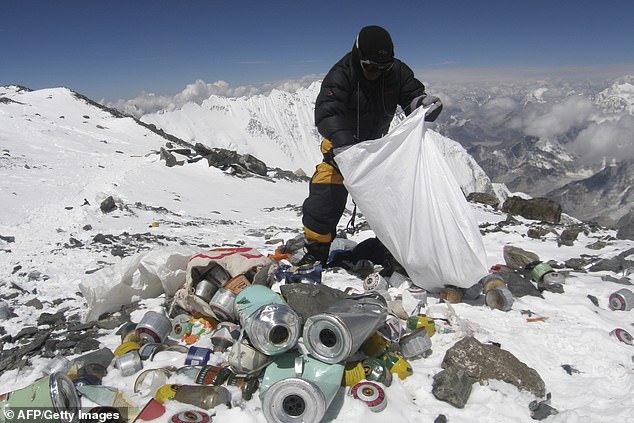
Mount Everest, the highest peak in the world, has long been a symbol of human achievement and adventure. However, its beauty is increasingly marred by the growing problem of waste left behind by climbers. A scheme introduced in 2014 aimed to encourage climbers to bring rubbish down from the mountain, but it was eventually scrapped due to widespread cheating.
The programme required climbers to pay a $4,000 deposit, which they could get back if they brought at least 18lbs (8kg) of rubbish down with them. The initiative was designed to address the issue of waste, including oxygen cylinders and human waste, left by previous climbers. Despite these efforts, the problem has persisted over the years.
Climbers found ways to bypass the system by collecting rubbish from lower camps rather than the higher ones where most of the waste accumulates. Tshering Sherpa, CEO of the Sagarmatha Pollution Control Committee (SPCC), explained that climbers often only brought back oxygen bottles from higher camps, leaving other items like tents, cans, and food packaging behind. This has led to a significant buildup of waste on the mountain.
The Scale of Waste on Mount Everest
Mount Everest is located within the Sagarmatha National Park in Nepal's Khumbu region. The number of tourists visiting the park has increased steadily over the years, with a notable rise between 2014 and 2017. While tourism brings in significant revenue for the Nepalese government and local economy, it also contributes to a massive amount of waste.
Each year, camps on Everest are littered with tattered tents, abandoned gear, and human waste. Although the SPCC records the amount of waste collected annually, there are no official estimates for the total waste currently on the mountain. A 2020 study predicted that up to 50 tonnes of solid waste may have accumulated on Everest over the past 60 years. In 2022, the Nepalese Army reported removing around 34 tonnes of waste from Everest and surrounding mountains, an increase from 27.6 tonnes in 2021.
The Impact of Climbing on the Environment
Every year, approximately 900–1,000 tonnes of solid waste are brought into the Sagarmatha National Park. An estimated 50 tonnes of this waste is located above Everest Base Camp. Between Camp One and Camp Four, one to three tonnes of human waste is left behind. In Spring 2023, Base Camp generated 75 tonnes of waste, and an estimated 20 tonnes of human waste is dumped in nearby pits each year. There are also between 100 and 120 open rubbish pits in the National Park.
To address this issue, the rubbish collection scheme was introduced in 2014, applying to climbers who ascended beyond Everest's base camp. However, the scheme faced challenges as climbers often failed to comply with the rules. According to Nepalese authorities, most of the deposit money was refunded over the 11-year programme. Yet, many climbers produced more waste than required, with an average of 12kg (26lbs) of waste per climber during their six-week acclimatisation and climbing period.
New Measures to Combat the Problem
With the previous scheme proving ineffective, officials are now introducing a new rule for climbers: a non-refundable clean-up fee of around $4,000. This fee will be used to set up a checkpoint at Camp Two and deploy mountain rangers to monitor waste collection further up the mountain.
Mingma Sherpa, chairperson of the Pasang Lhamu rural municipality, highlighted that the Sherpa community had long questioned the effectiveness of the deposit scheme. He noted that there were no penalties for not bringing trash down, and no designated fund for clean-up efforts. The new non-refundable fee aims to create a dedicated fund for monitoring and clean-up activities.
Looking Ahead
As the challenge of managing waste on Mount Everest continues, the need for effective and enforceable measures becomes increasingly urgent. The introduction of the new fee represents a step forward in addressing the environmental impact of climbing on the mountain. However, ongoing efforts and collaboration between authorities, climbers, and the local community will be essential to ensure the preservation of this iconic natural wonder.
Post a Comment