Painful Borders - Why Disabled Children Cross SADC Borders for Care
The Struggle for Basic Care
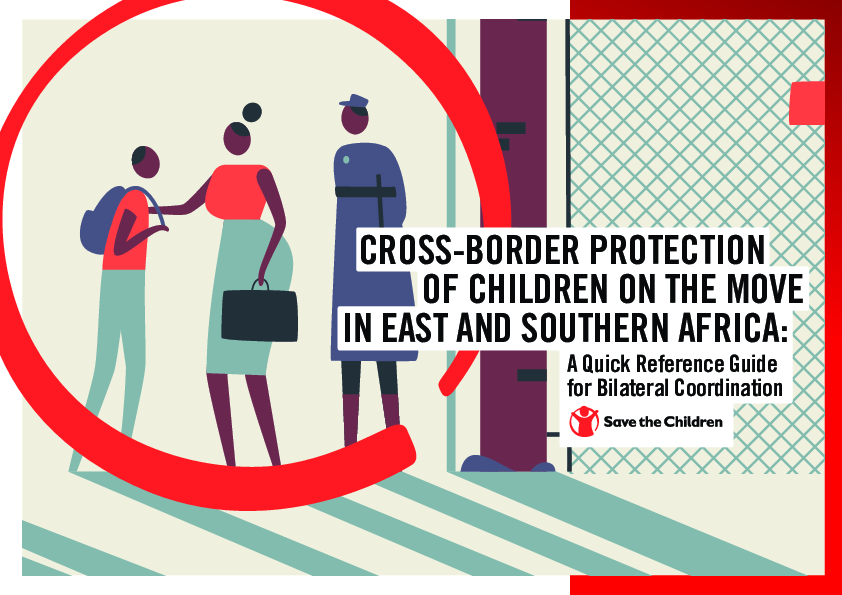
Twelve-year-old Naledi sat on a cardboard box at the Beitbridge border post, her twisted left leg wrapped in a faded blanket. At the same time, her mother pleaded with an immigration officer for permission to cross into South Africa. They had travelled overnight from Gwanda in Matabeleland South in the back of a pickup truck after a church group told them about a clinic in Polokwane where she might finally be fitted with a prosthetic limb. The nearest clinic to their home had only painkillers.
The visiting rehabilitation therapist came once every three months. Naledi was born with a severe congenital limb deformity and has never had a properly fitted assistive device. Her mother has no passport. Naledi has no birth certificate. But both had run out of options.
"I just want her to walk to school one day," her mother said. Across Southern Africa, this quiet movement of disabled children and desperate parents happens every week. It is a medical migration born of unequal health systems.
Their journeys expose families to debt, informal transport networks and immigration barriers and reveal the gap between the Southern African Development Community's (SADC's) promise of regional integration and the daily reality of children who must leave one country and enter another simply to walk, hear or learn.
Why Integration Matters
SADC's 16 member states are committed to regional integration and cooperation in health through protocols, charters and vision statements. The Protocol on Health calls on states to share resources and harmonise policies. The African Disability Protocol affirms the right of children with disabilities to health care, rehabilitation and assistive devices without discrimination. Agenda 2063 and the SADC Vision 2050 promise improved quality of life, social justice and inclusive human development.
Yet practical cooperation on disability care is almost non-existent. There are no functioning regional referral pathways for children with disabilities. There is no cross-border health financing mechanism, no common procurement system for wheelchairs and prosthetics, and no standardised patient record. Families rely on WhatsApp groups, church shelters and truck lifts to assemble their own regional health pathways.
Integration exists on paper. The bus tickets are real.
A Widespread but Poorly Counted Problem
Disability is common but rarely counted. Global estimates compiled by UNICEF in 2021 indicate that nearly 240 million children live with disabilities worldwide—about one in every ten children—and most live in developing countries. UNICEF notes that children with disabilities are "among the most marginalised people in the world" and face exclusion across health care, education and social services.
In Southern Africa, childhood disability arises from congenital conditions, road injuries, infections, malnutrition and complications at birth, all interacting with fragile rehabilitation systems. A 2018 study on access to assistive technology in Botswana and Eswatini found that 44 percent of people in Botswana and 67 percent in Eswatini who needed assistive devices did not receive them. A continent-wide review concluded that fewer than one in four Africans needing assistive products actually have them, warning that a lack of devices directly excludes people from school, work and community life.
Despite a growing disability burden, data on the number of children who cross borders for care are sparse. Dr Thandiwe Moyo, a paediatric orthopaedic surgeon in Gauteng, South Africa, said in an interview that she treats children from Zimbabwe, Zambia and Mozambique every week. "Many arrive with clubfoot, a condition usually corrected in infancy with serial casting," she said. "Others come with fractures that healed badly because plaster or X-ray film had run out in their district hospitals. They come late, and they come in pain."
Benedict Gudu, a medical doctor and researcher, added that childhood disability in Southern Africa is caused by a combination of congenital factors and preventable injuries, yet early interventions remain rare. "Those costs are regional when health systems, trade and migration are regional," said Lazarus Sauti, a governance analyst and lecturer at the University of Zimbabwe. Without cross-border planning, he warned, "poverty moves with people, and so does disability."
Hidden Economic Costs
For many families, the cost of care is insurmountable. A prosthetic limb can cost more than a year's income for a rural household. Transport to a foreign city requires selling livestock. Accommodation for a parent and child adds expense, as does the passport, if a child even has a birth certificate to qualify for one. There is no SADC regional health insurance that travels with the child.
Rutendo Masunda, a health economist in Harare, noted that the average cost of a basic prosthetic leg ranges from US$300 to US$700. "When you consider that more than 40 percent of the region's population lives on less than US$1.90 a day, it becomes clear why many children never reach the clinics that could help them," she said. She advocated for a regional fund to subsidise assistive devices and cross-border referrals, arguing that the investment would save money in the long term by enabling children to attend school and eventually work.
Paperwork that locks out care
For Naledi's mother, the hardest part of crossing into South Africa was not the distance. It was the documents. A child without a birth certificate cannot easily get a passport. A child without a passport cannot legally cross a border to reach the specialist care that may exist only in another SADC country. That is how a health problem becomes a border problem. It is also how regional integration becomes real or meaningless in a family's life.
Naledi's mother said she tried to register her daughter in Gwanda after being told she would need papers to travel for treatment. She said registry officials demanded details and documents linked to the child's father, who had long abandoned the family. She left without help. At the border, the same absence followed them. An immigration officer asked for a passport, then asked for a birth certificate, then asked for proof that Naledi belonged to someone who could guarantee her return.
Families across the region describe the same chain of barriers, where disability care depends on paperwork that poor households and cross-border families often do not have. The consequences are immediate. Children miss surgery windows that close as they grow. They miss therapy months that determine whether they will walk, sit, or hold a pencil. They miss school, not because they cannot learn, but because the system cannot process them.
A children's rights lawyer in Zimbabwe, Zororai Nkomo, said documentation barriers often turn what should be a routine referral into a crisis of mobility. "When you cannot prove who a child is on paper, everything becomes harder, including health care," he said.
Unequal Distribution of Specialists
Uneven distribution of specialists is another driver of cross-border migration. South Africa hosts most of the region's paediatric orthopaedic surgeons and tertiary hospitals, drawing referrals from Zimbabwe, Mozambique, Zambia, Lesotho and Eswatini. Botswana has invested in community-based rehabilitation teams and disability grants, but its specialised surgical capacity is limited. Zimbabwe and Malawi rely heavily on under-resourced public hospitals and faith-based centres. Mozambique's rehabilitation system has been repeatedly damaged by cyclones and constrained budgets.
"Those who can travel, travel; those who cannot are left behind," said United Kingdom-based diplomacy scholar Faith Kamupita. She added that SADC states need to develop shared specialist rosters so paediatric surgeons and therapists rotate across borders. "A child in rural Zambia should not have to travel 1,000 kilometres to South Africa for a procedure that can be done in Lusaka if there is regional cooperation," she said.
Voices from Across the Region
In Chipata, eastern Zambia, Blessings, a nine-year-old boy with spina bifida, spends much of his day lying on a reed mat because the district hospital has no child-sized wheelchair. "We were told the operation is done in South Africa," said his mother, Mervis Phiri, in a WhatsApp interview. She sells tomatoes and has never left Zambia. She does not know how to navigate two borders with a disabled child. The hospitals refer her elsewhere, but no one helps her cross.
In Nsanje, southern Malawi, Esnath's aunt described how the 11-year-old drags herself to school on her hands because the crutches available locally are too tall. "They said she must go to Blantyre or Zimbabwe," she said by phone. They cannot afford transport, accommodation or passports. Esnath's teacher, Grace Chaponda, said the girl sleeps through lessons from exhaustion and infections in her palms. "I do what I can, but she needs therapy and a wheelchair," she said. "She is bright, but we are losing her."
Jabulani Moyo, a Zimbabwean community rehabilitation worker in Francistown, Botswana, explained that his team trains local volunteers to support families. "We can help children learn to sit, stand and feed themselves," he said. "But when they need surgery or specialised devices, we must refer them to Gaborone or South Africa. Without money, they stay in the village." He believes SADC should create mobile surgical camps that travel across borders. "If we can share elephants in transfrontier parks, why can't we share surgeons?" he asked.
Policy Gaps and Promises
Regional leaders have recognised the problem but have done little to fix it. The SADC Protocol on Health was adopted in 1999, but its commitments to pooled resources and shared expertise remain largely unimplemented. A regional Centre of Excellence in Orthopaedic Surgery was proposed at a SADC health ministers' meeting in 2017, but has not materialised. One hopes that the SADC Secretariat's health desk works on a "federated digital identity system" to ease cross-border travel and financial transactions.
The secretariat needs to explore a framework for regional referral and financing of specialised health services, including disability care. At the national level, Botswana's community-based rehabilitation system dispatches trained workers to support families in villages, and the government offers disability grants. Zimbabwe's Jairos Jiri Association fits basic wheelchairs and callipers and runs inclusive schools, but waits for international donations for more sophisticated devices. South Africa's public hospitals perform complex reconstructions free at the point of care, funded by the state, but the system is overburdened. NGOs such as CBM and Leonard Cheshire run clubfoot clinics across borders with funding from donors, but they are projects rather than integrated programmes.
These are seeds, not systems.
The Cost of Inaction
The economic logic of ignoring disability is severe. Children with untreated disabilities are less likely to attend school, acquire skills or enter the labour market. Developmental economist Benedict Marufu estimates that lost productivity linked to disability costs SADC countries billions of dollars each year. "When you count the lost earnings, caregiver time and healthcare expenses, you see that investing in early intervention and assistive technology pays for itself," he said. He urged states to treat disability services as infrastructure. "We pool resources to build dams and power plants," he said. "Why not for rehabilitation centres?"
Potential Solutions
Experts interviewed for this article proposed a range of reforms. United Kingdom based diplomacy scholar Jethro Makumbe said regional referral agreements would allow children to be treated in neighbouring countries without visas or upfront payment, with the cost later settled between governments. "Mutual recognition of medical notes would eliminate repetitive tests and delays," he said. "Cross-border procurement of wheelchairs, prosthetics and hearing aids could lower unit costs through bulk purchasing. Additionally, a SADC disability fund, financed through member contributions and donor grants, could subsidise expensive procedures and devices."
Research has shown that shared specialist rosters would rotate paediatric surgeons and physiotherapists through member states, reducing the need for families to travel. International relations scholar Caroline Magedi Gwandigwa said tele-rehabilitation clinics could connect rural health workers with specialists in other countries via video link. "Centres of excellence could be established in at least two countries for complex surgeries, with transport and accommodation costs covered by the regional fund," she said.
Implementing these reforms would require political will, budget reallocations and strong accountability mechanisms. If SADC's integration agenda is to be meaningful, it must extend beyond trade corridors and electricity pools to the bodies of children with disabilities. Health cooperation is not a secondary issue but a core component of development, social justice and regional identity. It is time for SADC to move from protocols to practice. Until regional leaders create functional cross-border referral systems, pooled procurement, legal identity campaigns and dedicated funding for disability care, Southern Africa's children will continue to carry their pain across borders.
Post a Comment