Full Throttle: Chinese EVs Target One-Third of Global Market by 2030, UBS Forecasts
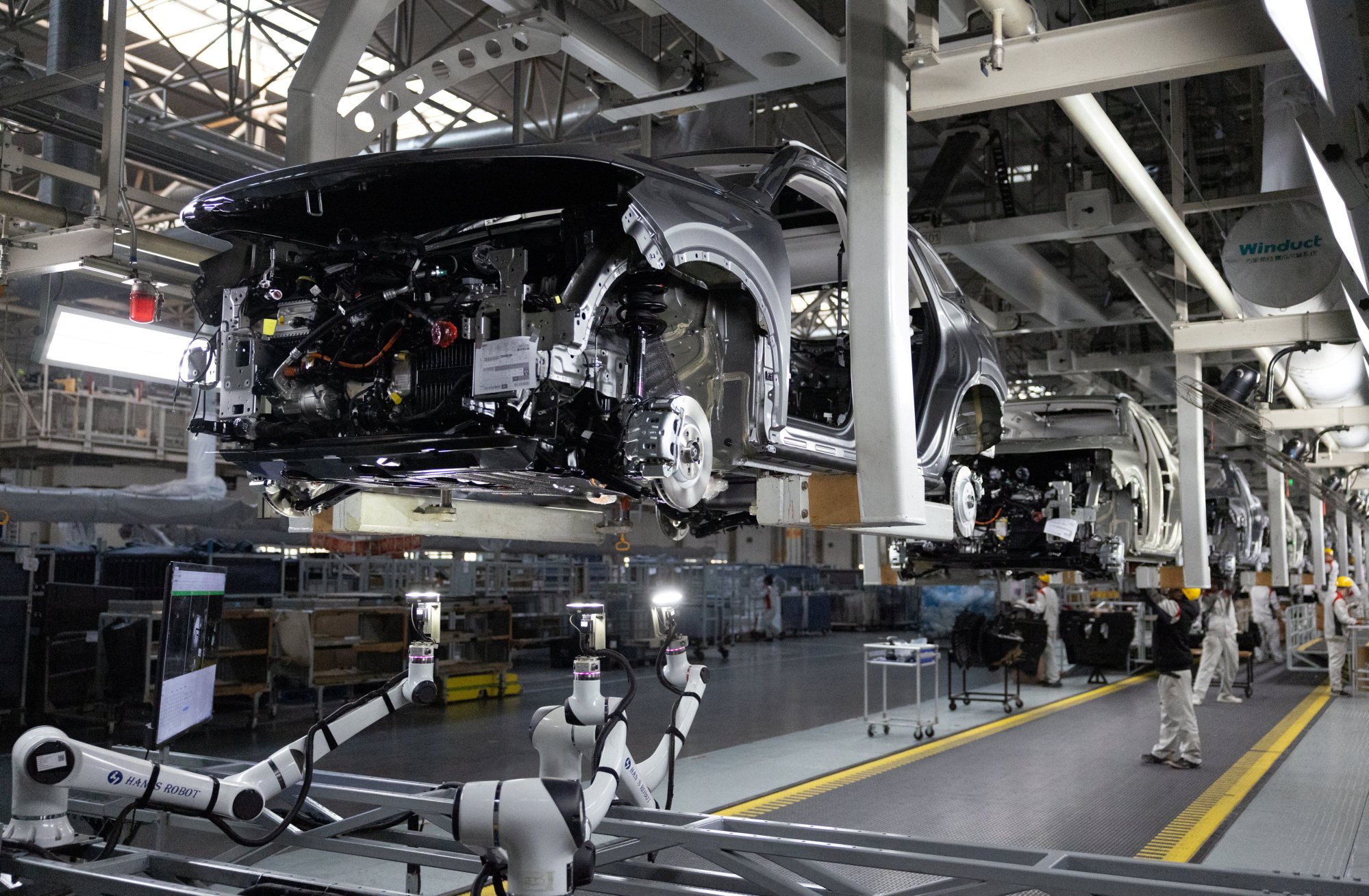
China's Electric Vehicle Dominance: A Global Perspective
China's electric vehicle (EV) industry is poised to maintain its global leadership, according to recent analyses by UBS. The Swiss bank forecasts that Chinese automakers will capture approximately one-third of the global auto market by 2030, with a significant portion of their profits coming from overseas markets. This projection remains unchanged despite growing trade barriers and Western protectionism.
Paul Gong, an analyst at UBS specializing in Chinese EVs, noted that while the European EV adoption slowdown and tariffs against Chinese EVs have posed challenges, recent developments suggest some recovery. "I think 2024 progress was slower than expected, but recent signs have shown some catch-up," he said.
The reliance on international markets has become increasingly evident as domestic competition intensifies. UBS estimates that overseas markets now account for about 20% of industry sales and up to 50% of earnings for some Chinese carmakers. This shift underscores the importance of global expansion for Chinese automakers.
Industry executives believe that while China may not dominate the market alone, global competition is consolidating around a few large EV platforms. This trend leaves room for emerging players such as India. Frank Diana, managing partner and principal futurist at Tata Consultancy Services, highlighted that China's aggressive learning curve positions it to hold a dominant market share. However, he emphasized that other players are also rising in the space.
India is among the markets beginning to close the gap, particularly domestically. V.G. Ramakrishnan, managing partner at automotive consultancy Avanteum Advisors, pointed out that Tata Motors and Mahindra have significantly increased their market share in the last five to six years. Both companies have expanded their EV portfolios and pursued overseas acquisitions, including Tata Motors' ownership of Jaguar Land Rover and Mahindra's purchases of South Korea's SsangYong and Italy's Pininfarina.
Despite these efforts, Ramakrishnan noted that these investments have not fully translated into global recognition for Brand Tata or Brand Mahindra. While both companies have an international presence through exports, they are not significant players in the global market.
Analysts believe that China's staying power in the EV sector stems from its scale, early investments, and vertically integrated supply chains. "The EV supply chain is dominated by Chinese companies," Ramakrishnan said. "The India EV supply chain, including electronics, is imported from China."
To counter trade barriers, Chinese carmakers are shifting from exports to local production. Thailand already hosts full production plants of SAIC, Great Wall Motor, and BYD, while Brazil and Hungary are set to add major BYD and GWM facilities by the middle of the decade. This expansion could eventually put pressure on India's domestic champions.
Tata Motors, India's EV market leader, aims for EVs to make up 30% of its domestic sales by 2030. However, analysts warn that reduced subsidies, narrowing tax incentives, and gaps in charging infrastructure could slow growth. Ramakrishnan noted that Tata's EV market share has already declined year on year as rivals like Maruti Suzuki and MG Motor roll out new models.
Chinese brands remain eager to deepen their presence in India. BYD operates through a joint venture with limited sales volume and no manufacturing footprint, while Chery and Great Wall Motor are seeking entry should regulatory conditions ease. "As and when [Chinese brands] come in, the customers will accept these brands," Ramakrishnan said.
As Chinese carmakers globalize, competition will increasingly hinge on platforms and partnerships rather than individual markets. Diana pointed to Africa as the next strategic battleground. "If you are able to create a relationship with South Africa, and you form a pathway into the broader African market, then you've expanded your space," he said. "So it focuses on relationships, strategic partnerships, not just technology and supply chain."
Post a Comment