Fujitsu Embraces AI to Empower Young Leaders
Fujitsu’s Strategic Shift Toward AI and Organizational Transformation
Fujitsu, a Japanese IT company with a rich history dating back to its founding in 1935, has embarked on a significant transformation driven by the rise of artificial intelligence (AI). The company recently announced a strategic partnership with NVIDIA, a leading semiconductor and AI technology firm. This collaboration marks a pivotal step in Fujitsu’s journey toward becoming an AI-centric enterprise.
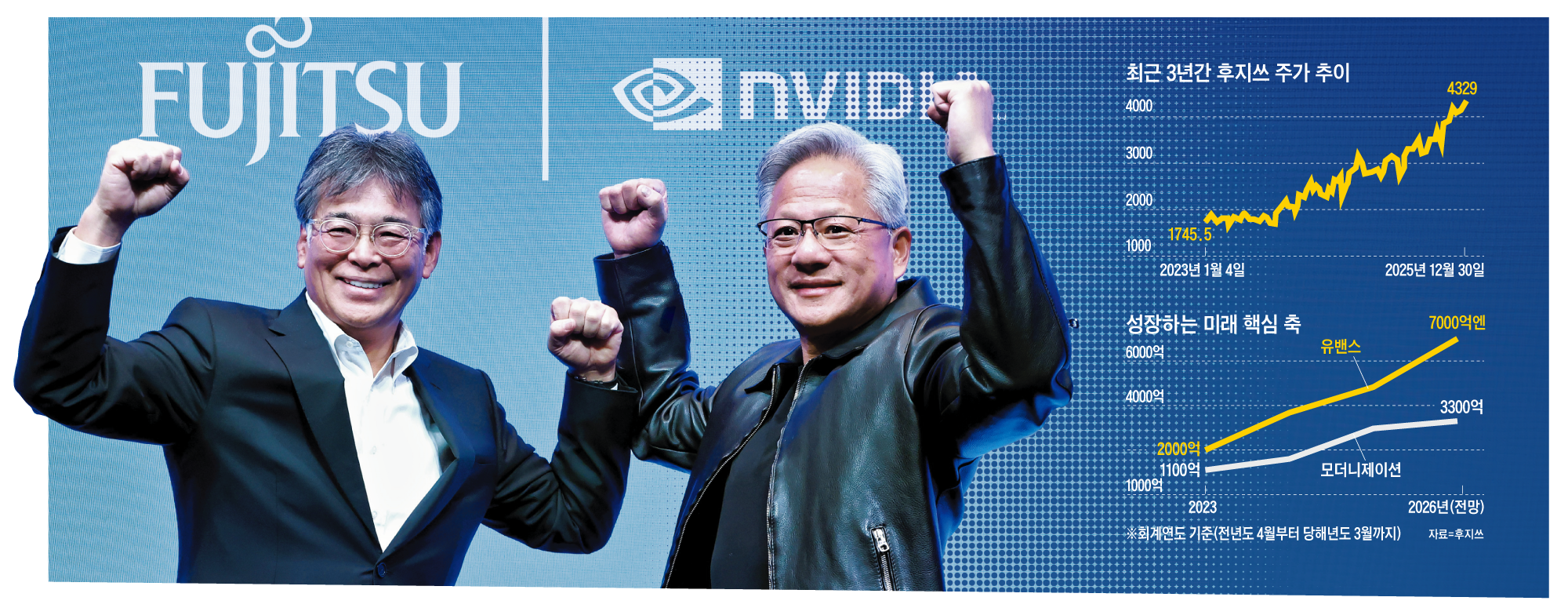
During a joint announcement in October last year, Tokita Takahito, CEO of Fujitsu, and Jensen Huang, CEO of NVIDIA, highlighted their shared vision for developing new AI semiconductors. These semiconductors are designed to integrate Fujitsu’s advanced technologies with NVIDIA’s powerful chips, expanding their applications beyond traditional AI data centers into the domain of “physical AI.” Physical AI refers to systems that drive real-world devices such as robots, automobiles, drones, and industrial machinery, opening up new possibilities for innovation and efficiency.
From System Integration to AI-Centric Solutions
For many years, Fujitsu primarily focused on providing system integration (SI) services to public institutions and large corporations in Japan. This approach involved managing the entire lifecycle of information systems, from planning and construction to operation and maintenance. While this model helped Fujitsu establish itself as a leading IT company in Japan, it also led to perceptions of being a “domestically focused company.”
Now, Fujitsu is undergoing its third major transformation, positioning itself as an AI-centric solution-oriented company. This shift represents a fundamental change from merely developing software to directly offering AI agents and next-generation computing infrastructure. Fujitsu aims to become an “AI-first” enterprise, focusing on delivering innovative products and platforms that leverage AI technologies.
The Rise of Uvance: A New Revenue Stream
To support this transformation, Fujitsu introduced Uvance, a core brand aimed at breaking away from its traditional SI-centric business model. Uvance offers standardized solution systems tailored to industry-specific challenges and global issues such as carbon neutrality and supply chain optimization. By selling verified AI models and platforms rather than one-off projects, Fujitsu is transitioning to a more profitable structure.
Uvance has quickly become a significant revenue generator for Fujitsu. For the fiscal year 2025 (April 2024–March 2025), Uvance sales reached 482.8 billion Japanese yen, a 31% increase from the previous year. Its share of total service solution sales rose from 17% to 21%, indicating the growing importance of this initiative.
Strategic Alliances and Technological Innovation
The alliance with NVIDIA plays a crucial role in Fujitsu’s AI strategy. In October 2023, Fujitsu and NVIDIA announced joint development in various fields, including AI semiconductors. Fujitsu integrated its Japanese-language-optimized large language model (LLM) “Takane” with NVIDIA’s AI agent development tools, creating a powerful platform for physical AI applications.
This collaboration highlights Fujitsu’s commitment to leveraging cutting-edge technologies to enhance its offerings and stay competitive in the rapidly evolving AI landscape.
Restructuring the Workforce: A Focus on Talent and Flexibility
Recognizing that creativity and expertise are essential for innovation, Fujitsu has implemented significant personnel reforms. The company moved away from the traditional Japanese seniority-based pay system, introducing a job-based personnel system that determines compensation and rankings based on job roles rather than age or tenure.
One of the most groundbreaking changes is the internal posting system, where employees apply for desired roles themselves instead of being assigned by the company. This system has enabled junior employees to take on managerial positions, fostering a culture of self-driven career development.
Challenges and Future Prospects
Despite these positive developments, Fujitsu’s transformation has not been without challenges. Key performance indicators have remained stagnant, with sales hovering around 3.5 trillion Japanese yen over the past five years. Operating profits have fluctuated without a clear upward trend, raising questions about the effectiveness of the reforms.
Additionally, the label of a “domestically focused company” persists, as domestic service solution sales grew by 8%, while overseas sales declined by 2%. Fujitsu must prove its global competitiveness against industry giants like Accenture, Google, and Microsoft.
However, Fujitsu’s “modernization” business—upgrading legacy enterprise systems to fit the cloud and data era—is serving as a new reliable cash cow. The success of its reforms will depend on how quickly Uvance and similar offerings can fill the gaps left after replacing clients’ outdated systems.
In conclusion, Fujitsu’s journey toward becoming an AI-centric enterprise is marked by strategic partnerships, organizational reforms, and a focus on innovation. While challenges remain, the company is well-positioned to navigate the complexities of the AI era and emerge as a leader in the global market.
Post a Comment