China's January 1 Silver Restrictions Spark Global Crisis, Analysts Warn Amid Volatility
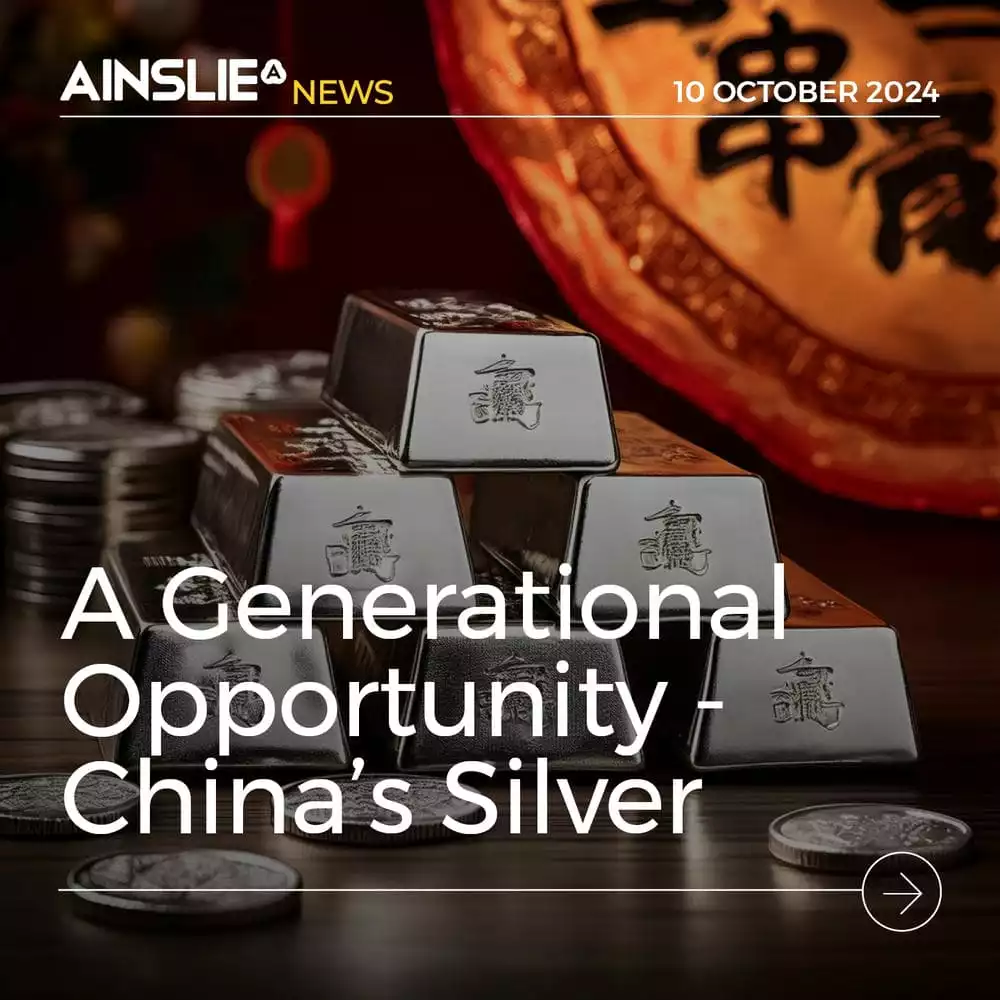
China's New Export Controls on Silver Spark Global Concerns
China’s recent decision to implement a new export-licensing system for silver has sparked widespread concern among global investors and industry experts. The move, which came into effect on Thursday, involves a two-year special government license for the export of silver, along with other critical minerals like tungsten and antimony. While the Chinese government claims the policy is aimed at protecting natural resources and the environment, many market analysts believe it signals a broader strategy to limit the availability of silver in international markets.
The new licensing system replaces an existing quota system that had been in place since 2000. Under the updated rules, exporters must meet strict criteria: firms must prove they have exported silver annually from 2022 to 2024, while new applicants need to demonstrate annual production exceeding 80 tonnes and consistent export records. This stringent approach could significantly reduce the number of companies eligible to export silver, thereby tightening supply and increasing prices.
A Shift in Market Dynamics
Analysts suggest that the shift in export policy could lead to a supply crunch, especially given the current volatility in silver prices. Spot silver recently briefly surpassed $80 an ounce for the first time this month before retreating to the $70 range. Antonio Di Giacomo, a senior market analyst at XS.com, noted that silver has outperformed gold in recent months due to its dual role as both a safe-haven asset and a key industrial metal.
"Silver acts as a safe-haven asset during periods of uncertainty while also benefiting directly from industrial and technological expansion," Di Giacomo said. "This explains its relatively higher volatility compared to gold."
Joseph Dahrieh, managing principal at Tickmill, pointed out that the new licensing system could add significant friction to the export process, even though it is not an outright ban. According to a December 12 review by the Ministry of Commerce, only 44 firms qualified for exports in 2026-27, indicating a concentration of export rights and increased bureaucratic hurdles.
Impact on International Markets
The restrictions come at a time when the United States, a major importer of silver, is seeking to secure supplies for use in photovoltaic, artificial intelligence, and electric vehicle (EV) manufacturing. China is a key producer of silver, with strong refining and processing capabilities. In November, the U.S. government added silver, along with copper, to its list of critical minerals, highlighting its strategic importance to the economy and national security.
Billionaire Elon Musk expressed concerns about the impact of the new restrictions on global supply chains, stating on social media: "This is not good. Silver is needed in many industrial processes." Alicia Garcia-Herrero, chief economist for the Asia-Pacific region at Natixis, added that the licensing requirement aims to ensure China's domestic needs for solar and EVs are met.
Price Projections and Market Risks
Garcia-Herrero noted that silver exports to the U.S. and Europe have already been declining, and the situation is expected to worsen. She pointed to the "Shanghai premium," currently ranging from $5 to $10 per ounce over the Commodity Exchange (Comex), as evidence of the supply squeeze. Tighter export controls could create more availability in China, pushing prices down locally while driving them up outside the country.
Some analysts predict that if China applies the licensing requirements very tightly, the price of silver could reach $100 an ounce. However, risks remain, including potential U.S. tariffs, shifting real interest rates, the strength of the dollar, and the resilience of global industrial growth. Xu Shiwei, an analyst at China Merchants Futures, warned that pressures from technological substitution and the potential implementation of tariffs could affect silver prices.
Outlook for 2026
Despite these challenges, some market participants remain optimistic. Di Giacomo at XS.com believes that silver is poised to play a key role in 2026. "Silver is not only reaching record highs but also redefining its role within the commodities market," he said. "While volatility is likely to persist, the broader picture suggests the current move reflects a regime shift rather than a fleeting rally."
Post a Comment