Central Bank Hopes for Recovery as Private Sector Remains Cautious
Economic Outlook and Recovery Efforts in Nepal
A day after the private sector expressed concerns over a historic low in business confidence, Nepal Rastra Bank (NRB) offered a more optimistic view of the economy. The central bank noted that following recent political unrest, the economy has begun to show gradual signs of recovery.
In its economic outlook released on Thursday, the NRB highlighted that the newly formed government has maintained law and order, prioritized good governance, and implemented institutional reforms. It also introduced concessional arrangements to support reconstruction efforts and relief measures for businesses affected by the unrest. These initiatives are starting to yield positive results across the economy.
The NRB presented findings from its economic activities survey for the last fiscal year and projections for the current one. It stated that Nepal's external sector remains robust and well-protected. Despite disruptions in the first quarter of the current fiscal year, it expects agriculture, services, and industry to perform better over the year.
This assessment contrasts sharply with the concerns raised by the private sector. On Wednesday, during an all-party national dialogue titled "Cooperation for Peace, Stability and Prosperity," FNCCI President Chandra Prasad Dhakal said business morale was at an all-time low. He argued that the private sector is unable to invest with confidence due to the lack of an investment-friendly environment and insufficient guarantees of property security. Dhakal also questioned the government's employment strategy, stating that the state can provide jobs to only about 3,000 to 3,500 people annually. He called for a clear political commitment towards the private sector, which contributes 81 percent to the economy and 86 percent to total employment.
Despite these concerns, the NRB maintained that policy efforts by the government to strengthen governance and create a business-friendly climate, combined with an accommodative monetary stance, are expected to support industrial recovery. Several favorable factors are already influencing industrial activity, including technological development, ample liquidity in the banking system, declining interest rates, and stable international prices of oil and other raw materials.
Government measures such as uninterrupted electricity supply to factories and businesses, cash subsidies for exports of products like footwear, mineral water, and cement, commitments to attract foreign investment, and rising international demand for some Nepali products are also expected to gradually lift the sector.
In agriculture, the NRB acknowledged that delayed monsoon rains in Madhesh province during the first quarter adversely affected paddy cultivation and other major crops. However, the ongoing shift towards modernization, productivity, and commercialization is expected to offset those losses. Expanded use of mobile applications and digital services, better access to weather information, improved seeds and fertilizers, enhanced irrigation facilities, and easier supply of farm tools are projected to support higher output of other crops.
Physical infrastructure worth an estimated Rs84.4 billion was damaged during the September 8-9 violence linked to the Gen Z movement. Reconstruction activities related to the damage are expected to pick up pace, while election-related activities are likely to boost transportation, hotel, and restaurant businesses, supporting higher imports. The availability of investable funds at lower interest rates has already led to increased investment in the hotel industry.
Economists and political analysts also expect the election period itself to inject momentum into the economy, as government agencies, political parties, candidates, institutions, and citizens step up spending. Traditionally, elections in Nepal are associated with a surge in expenditure. The government releases billions of rupees into the market for logistics and security, while candidates spend heavily on campaigns, stimulating demand across sectors.
Multiple studies show that Nepal's economy typically expands by 1 to 2 percent during election years, driven largely by consumption rather than long-term investment. Economist Chandra Mani Adhikari said elections boost real GDP growth primarily through higher consumption. When billions of rupees are mobilized for voter education, publicity, polling, counting, temporary police recruitment, and campaign activities, it significantly revs up the economy.
The NRB also expects the service sector to improve, citing better domestic and international tourism prospects, rising numbers of domestic and foreign visitors, greater use of digital technologies, and expansion of retail and wholesale trade. Although some hotels were damaged during the unrest, Nepal remains an attractive destination, and increased foreign tourist arrivals have already boosted tourism income.
On prices, the bank noted that global inflationary pressures have eased as fuel and food prices declined worldwide and central banks in advanced and emerging economies adopted accommodative monetary policies. Nepal's average consumer inflation stood at 4.06 percent. In the current fiscal year, international petroleum prices are expected to remain moderate, inflation in neighboring India is likely to continue declining, and although lower domestic agricultural output and election-related spending could add some pressure, overall inflation is projected to remain contained.
The annual average consumer inflation rate is expected to hover around 4 percent by the end of the fiscal year. The bank also highlighted encouraging trends in remittance inflows, driven by a sharp increase in the number of Nepalis going abroad for foreign employment in the first quarter. While tourist arrivals were weak in September, they improved in subsequent months, which is expected to further boost tourism income.
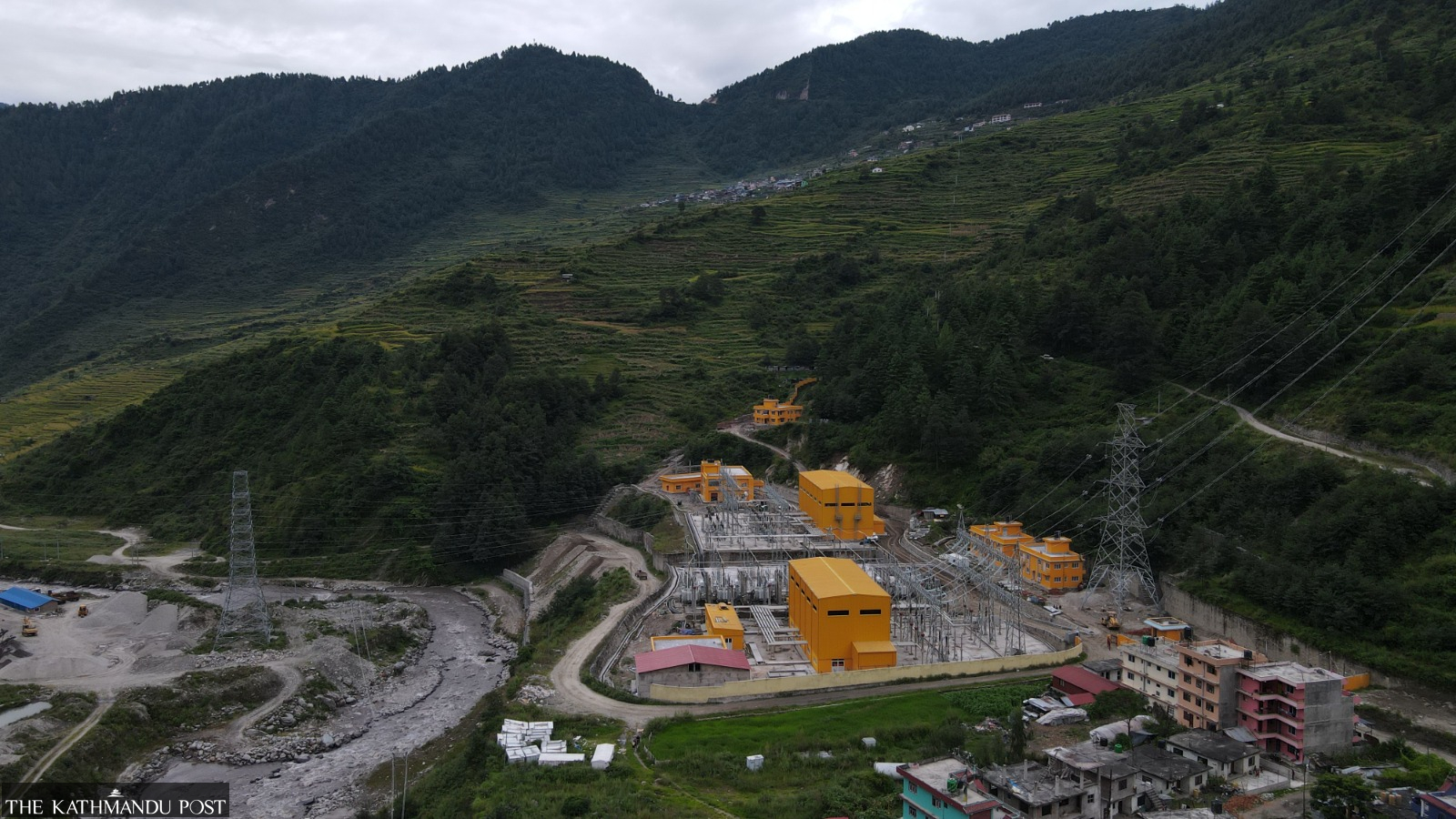
On infrastructure, construction and upgrading of provincial highways, urban roads, and local road networks are ongoing. Several major projects, including hydropower schemes developed by both the public and private sectors, electricity transmission lines, and tunnel roads, have gained momentum. Physical progress on several key projects has reached completion, while others are expected to see accelerated construction and completion during the year.
Rapid expansion of information technology access and faster implementation of national and provincial pride projects also point to a positive outlook for infrastructure expansion, although climate change-induced floods and landslides are likely to cause some disruptions.
While exports have improved, the central bank warned that rising imports could further widen the trade deficit. Even so, it said prudent fiscal management could help maintain external sector balance over the long term and ease pressure on foreign exchange reserves.
Overall, considering recent trends in remittances and foreign trade, the central bank expects Nepal's external sector to remain in a favorable position in the coming year, despite lingering risks at home and abroad.
Post a Comment