Ancestral Cannibals: Scientists Uncover Evidence of Neanderthal Child Consumption
Uncovering the Dark Truth of Early Human Cannibalism
A recent study has revealed a shocking insight into the behavior of early humans, suggesting that they may have engaged in cannibalism by consuming Neanderthal children as far back as 45,000 years ago. This grim discovery was made through the analysis of bones found in a cave in Belgium, where evidence of cannibalism had already been documented.
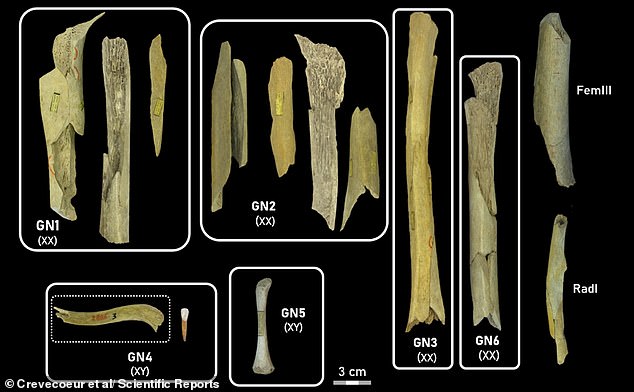
The Goyet caves, first excavated in the 19th century, have provided one of the most significant collections of Neanderthal remains in northern Europe. A 2016 study highlighted that a third of the 101 bones uncovered there—primarily from the lower limbs—showed signs of cannibalism, including cut marks and notches. Researchers noted that the victims were predominantly women and children, which suggests a deliberate selection rather than random occurrences.
According to Isabelle Crevecoeur, research director at the French National Centre for Scientific Research, the composition of the victims cannot be considered coincidental. “The fact that the cannibalized women and children came from elsewhere indicates 'exocannibalism'—the consumption of individuals belonging to one or more external groups,” she explained.
To understand the biological background of these individuals, the team combined genetics, isotope analysis, and morphology studies. The DNA analysis revealed that the four adult or adolescent victims were women of small stature, around 1.5 meters tall, who were not from the local area. There were also two male children, one infant, and another child aged between 6.5 and 12.5 years old.
Further examination of the remains showed evidence of circular impacts on the bones, likely used to extract marrow—a highly calorific resource. These findings indicate that the Neanderthal women and children from other regions were brought to Goyet and consumed.
This kind of behavior is observed in chimpanzees, where it serves to weaken neighboring populations or assert territorial control. Patrick Semal, another author of the study from the Royal Belgian Institute of National Sciences, noted that the Goyet site provides valuable insights into potential conflicts between groups during the Middle Paleolithic period.
At this time, Neanderthal groups were declining while Homo sapiens were expanding across Northern Europe. Although the identity of the cannibals remains uncertain, the researchers suggest that it could have been Homo sapiens preying on rival Neanderthals. However, they lean towards the possibility that the cannibals were Neanderthals themselves, citing evidence that some fragmented bones were used to retouch stone tools—a practice mainly associated with Neanderthals.
Key Events in Neanderthal and Human History
- 300,000 years ago: Homo sapiens emerge in Africa.
- 60,000 to 70,000 years ago: Homo sapiens migrate from Africa to Eurasia.
- 50,500 to 43,500 years ago: Homo sapiens breed with Neanderthals.
- 43,500 years ago: Neanderthals start to die out.
In their paper published in Scientific Reports, the researchers stated that the unusual demographic profile of the cannibalized individuals—adolescent/adult females and young individuals—cannot be considered natural. They also ruled out subsistence needs as the primary reason, given the abundance of other animal remains with similar butchery marks.
The findings suggest that weaker members of one or multiple groups from a neighboring region were deliberately targeted. While the exact causes of inter-group tensions in the Pleistocene era remain unclear, the regional context supports the hypothesis that conflict played a role in the accumulation of these individuals at Goyet.
Although Homo sapiens are not yet documented in the region at the same time as Neanderthals, evidence shows they were present around the same time in Germany, approximately 600 km to the east. While the hypothesis that Homo sapiens were the predators cannot be entirely dismissed, the researchers believe the most plausible explanation for the cannibalism is conflict between Neanderthal groups.
The Legacy of Neanderthals
Scientists have long debated what led to the decline of Neanderthals. A recent study suggests that they may never have truly gone extinct, as their DNA lives on in modern humans. Researchers from Italy and Switzerland argue that Neanderthals did not experience a "true extinction" because their genetic material is present in people today.
Over a period of as little as 10,000 years, Homo sapiens mated with Neanderthals, leading to a gradual "genetic assimilation." This process highlights the role of genetic admixture in their disappearance. Homo sapiens coexisted with Neanderthals for thousands of years before becoming dominant.
Skeletal evidence shows that Neanderthals had large noses, strong double-arched brow ridges, and relatively short, stocky bodies. Their existence raises many questions about human evolution and the relationship between species. Did ancient human ancestors really resort to cannibalizing young children for survival? Did Neanderthals truly go extinct, or were they absorbed into our DNA over time? Were they merely prehistoric "bedmates," or did they share a deeper connection?
As scientists continue to uncover the secrets of the past, the story of Neanderthals remains an intriguing chapter in the history of human evolution.
Post a Comment