Analyst Dismisses 'Economic Collapse' Amid Record Weakness
Understanding the Won-Dollar Exchange Rate and Economic Fundamentals
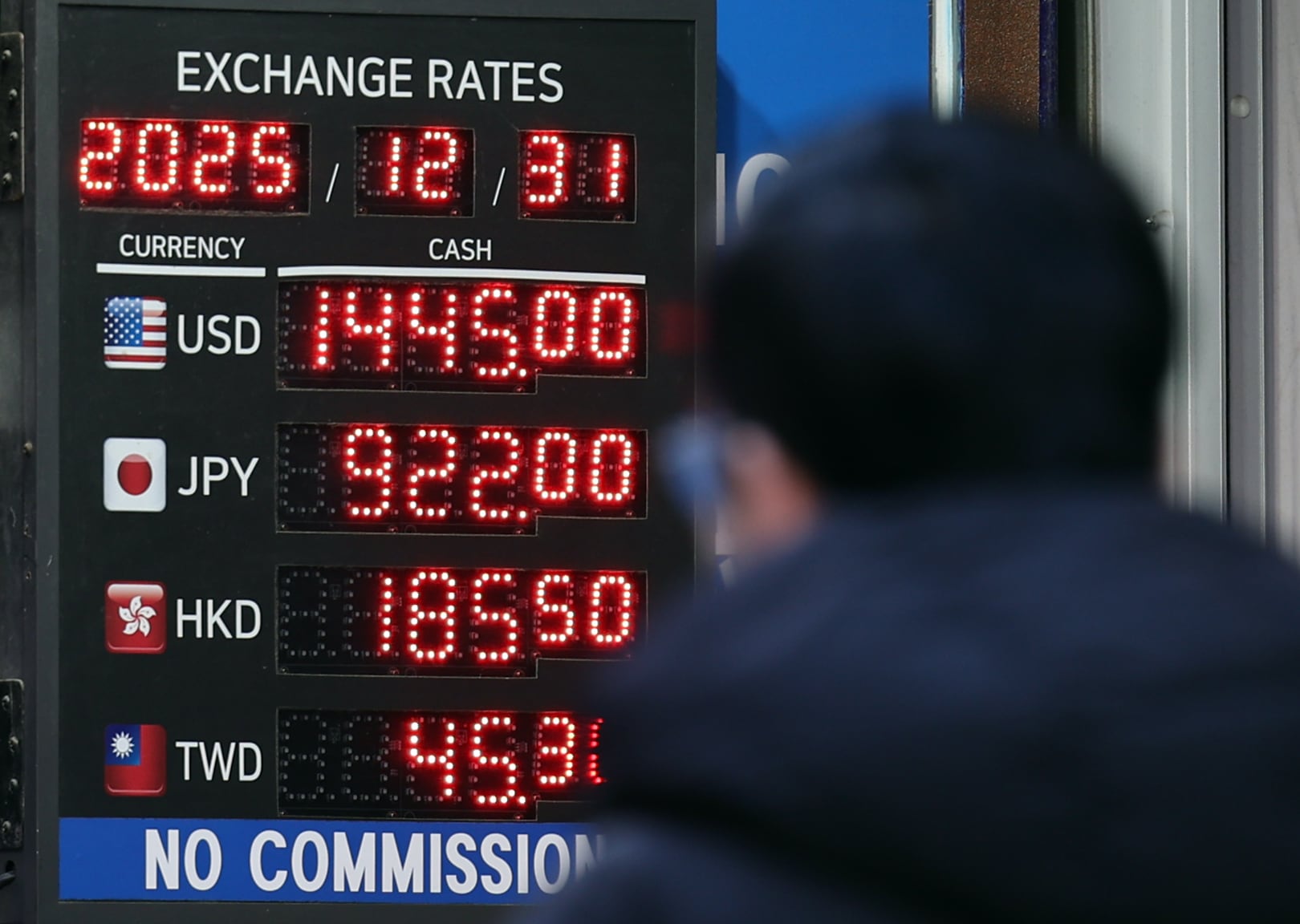
The won-dollar exchange rate has reached an unprecedented level of 1,422 Korean won this year, marking a significant milestone. However, Kim Hak-gyun, head of the Shinyoung Securities Research Center, argues that this development should not be interpreted as an indicator of economic collapse. In his 2025 Market Analysis report, he emphasizes that the recent weakening of the won is not a sign of structural economic failure but rather a reflection of changing investment behaviors.
Kim highlights that in previous foreign exchange crises, sharp increases in the won-dollar exchange rate were often accompanied by serious economic issues, including large-scale withdrawals of foreign capital from Korean markets. This time, however, the situation is different. The current depreciation is primarily driven by domestic investors, including both institutions and individuals, seeking to diversify their portfolios by investing more in U.S. stocks.
Domestic Investment Trends and Foreign Capital Flows
During the period of won weakness, there was a notable increase in domestic investors' investments in U.S. stocks, surpassing the scale of foreign investor withdrawals. Over the past six months, foreign investors actually net purchased 6.5 trillion Korean won worth of Korean stocks. This suggests that the exchange rate movement is not due to a crisis but rather a structural shift in how domestic investors allocate their assets globally.
According to U.S. Treasury Department data, as of the end of September 2025, Korean investors’ net purchases of U.S. stocks amounted to $53.2 billion. This figure significantly outperforms Japan’s $28.2 billion and Taiwan’s $11.5 billion. Kim attributes this trend to a portion of household financial assets, which had previously been held in safe assets, now moving into U.S. stocks. This shift reflects a broader change in investment strategies among Korean investors.
Strong Fundamentals Supporting Dollar Earnings
Kim stresses that it is crucial to analyze the direction of capital movements rather than focusing solely on the exchange rate itself. He explains that exchange rates are influenced by structural factors such as growth rates, interest rates, and price stability. In recent years, the U.S. has shown stronger economic growth compared to Korea, with GDP growth rates of 2.9% in 2023 and 2.8% in 2024, while Korea recorded 1.6% and 2.0% respectively. The forecast for 2025 shows the U.S. at 1.8%, significantly ahead of Korea’s 1.0%.
Despite the higher base level of the won-dollar exchange rate, Kim notes that Korea’s fundamental capacity to earn dollars has never been stronger. A key indicator of this strength is the current account balance, which has remained in surplus, recording over 4% of GDP in 2024 and over 5% in 2025. This contrasts sharply with historical periods like the 1997 IMF crisis, when Korea faced chronic current account deficits, and even during the 2008 global financial crisis, when the surplus was minimal.
East Asian Currencies Facing Similar Challenges
Kim also challenges the notion that the won’s weakness is solely a Korean issue. He points out that other East Asian currencies, such as the Taiwanese dollar and the Japanese yen, have also experienced significant depreciation against the U.S. dollar. The Taiwanese dollar weakened by 7.4% this year, more than the won’s 6.4%, while the yen fell by 8.5%. This suggests that the current exchange rate movements are part of a broader regional trend.
However, Kim notes that the yuan has recently strengthened against the dollar, breaking its previous synchronization with the won. This is attributed to eased U.S.-China trade tensions and the impact of tariff pressures. He forecasts that the yuan's strength could serve as a leading indicator for the future direction of East Asian currencies, particularly as the yen faces challenges in maintaining further weakness.
Implications for Korean Stocks and Future Outlook
Kim also highlights that the Korean stock market has performed exceptionally well this year, rising by 76%, far outpacing the U.S. market’s 17% growth. This performance signals a shift in investor sentiment, as the perception of escaping the domestic market has begun to lose momentum.
Looking ahead, Kim predicts that if the won-dollar exchange rate enters a downward phase, the relative attractiveness of Korean stocks as non-dollar assets may re-emerge. The growth rate gap between Korea and the U.S., which widened over the past three years, is expected to narrow significantly in 2026, with both countries forecasting a growth rate of 1.9%. Additionally, the Korea-U.S. interest rate differential is narrowing, as the U.S. is expected to cut its benchmark rate three times, while Korea has maintained its rate since June.
Post a Comment