The Elephant in the Room: Is AT's Struggle Due to Mismanagement or Underfunding?
Minister’s Ten Months in Office: Key Issues and Controversies
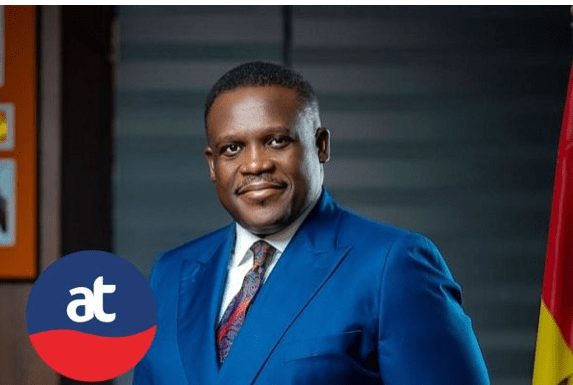
The Minister of Communications, Digital Technology and Innovations, Samuel Dzata George, recently shared his insights during an exclusive interview on TV3. The discussion covered a wide range of topics, including network quality, the DSTV saga, upcoming SIM registration, 15 new industry legislations, and the sensitive matter of what the government plans to do with AT Ghana. However, two major issues that have been at the forefront of public discourse since he took office were notably absent from the conversation—AT Ghana's potential merger or absorption with Telecel, and the deadline for the rollout of 5G in Ghana.
It remains unclear whether these topics were intentionally omitted or simply overlooked by the interviewer. Despite this, the minister did touch upon the AT Ghana issue, though he stopped short of addressing the merger or absorption with Telecel, which he had previously championed strongly.
KPMG Audit and Government’s Stance
Earlier in the year, the minister mentioned that Telecel was providing roaming services to AT, while KPMG was conducting an audit to advise the government on the relationship between the two entities. He even hinted at a merger being 90% complete, outlining integration levels and timelines before later backtracking. Although he announced in September that KPMG had been contracted as transaction advisors, it wasn’t until mid-October that the firm actually began work on the matter.
In the TV3 interview, the minister stated that KPMG’s mandate is to audit AT Ghana before the government decides its next steps—whether to invest or not. He also proposed an audit of Telecel Ghana, but never explicitly mentioned the merger or absorption.
Blaming AT Management
One of the most controversial statements made by the minister was blaming AT Ghana’s management for the company’s current state. This came as a surprise to many, especially given the reputation of AT workers as some of the best in the industry. For years, it was commonly believed that Tigo and AirtelTigo (now AT Ghana) had top-tier talent, and if they had the same level of investment as MTN, they could achieve remarkable results.
However, the minister shifted the blame from previous governments and shareholders to the management itself, stating, “The very people who run Airtel to the ground [and] run Millicom to the ground are sitting in management today at AT and have run it to the ground.” This marked a significant departure from his earlier narrative, which focused on lack of investment as the root cause of AT Ghana’s struggles.
Tigo and Airtel Management Roll Call
The minister’s comments raised questions about the management of Tigo and Airtel over the years. Several key figures, such as Patricia Obo-Nai, Lucy Quist, and Mitwa Ng’ambi, have moved on to other roles, often due to the lack of investment rather than poor management. Their success in other markets highlights the potential of the teams at Tigo and Airtel, despite financial challenges.
Workers Demoralized
The minister’s criticism of AT’s management has caused concern among workers, who feel their future is being decided without their input. Some employees attempted to hold press conferences or demonstrations to demand clarity, but the management advised against it, leading to a peaceful protest where workers wore red and black to show their mourning and confusion.
US$250 Million Debt and Force Majeure
The minister’s claim that AT Ghana owes $250 million has been met with skepticism. Industry experts and staff question the accuracy of this figure, noting that PPL Net, which runs AT Ghana, is debt-free. Additionally, the minister claimed that ATC disconnected towers due to a force majeure, but it was revealed that the debt had been significantly reduced, leaving only a $20 million liability.
Despite this, the minister continued to highlight the original debt figures, raising questions about transparency. The situation with ATC and AT Ghana appears to be more complex than initially presented, with government involvement playing a critical role in resolving the debt.
Telecel’s Role and Debt
Telecel also faces its own debt challenges, inherited from Vodafone. While the company claims to have invested $243 million, there are allegations that much of this is in the form of debt cancellation. The minister has accused Telecel of failing to meet its investment commitments, yet he now promotes a partnership with Telecel to absorb AT Ghana.
This raises several questions: Why blame AT’s management when the audit is still pending? Why criticize the previous government for failing to ensure investment in Telecel, yet support a merger with the company? Why claim a force majeure for AT’s shutdown when the debt was significantly reduced?
These unanswered questions continue to fuel debate within the industry, leaving analysts and stakeholders seeking clarity on the government’s true intentions.
Post a Comment