Inside Nigeria's surge of job seekers with stolen credentials
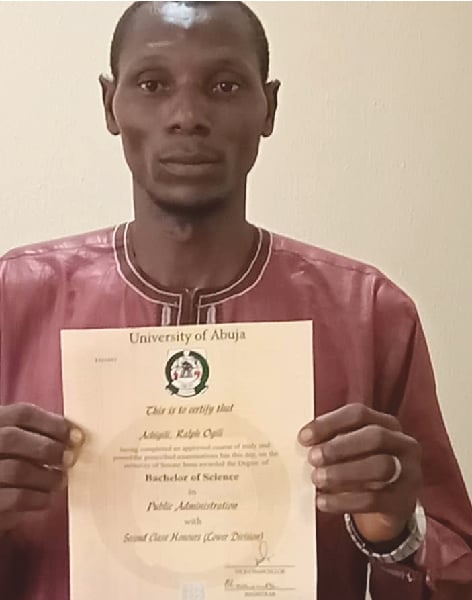
The Rising Trend of Certificate Forgery in Nigeria
Nigeria is witnessing a growing trend of certificate forgery, driven by high unemployment and the stringent job requirements that often leave young people and even public officials with no choice but to resort to illegal means. This phenomenon persists despite government crackdowns aimed at restoring the credibility of educational and professional qualifications.
A Personal Story of Desperation
Bernard Chike, a 27-year-old unemployed resident of Lagos, shares his story of despair. He only holds a Senior School Certificate, which has made it difficult for him to secure employment. Chike lost his mother when he was just 18, and this event marked the end of his hopes for higher education. His father urged him to fend for himself, leading him to take up casual work in a factory. Despite his efforts, Chike found himself constantly facing rejection due to his lack of formal education.
Chike’s social circle eventually expanded, and he reconnected with old friends through social media. One such friend, Stanley, who worked as a project manager, advised Chike to forge a certificate to improve his chances of finding a job. Although Chike considered this option, he could not afford the cost. However, he managed to find a job offer at Idumota, only to be rejected when the employer demanded to see his certificates.
The Prevalence of Certificate Forgery
Investigations reveal that certificate forgery is a widespread issue in Nigeria, largely fueled by unemployment and underemployment. According to the National Economic Summit Group, Nigeria's unemployment rate stood at 5.3% in the first quarter of 2024, with higher rates among females and urban dwellers. Desperate individuals often turn to forgery agents who alter or fabricate documents for a fee. In some cases, people steal certificates belonging to others to gain employment, promotions, or official registration.
A recent undercover report by Daily Trust revealed that fake certificates can be obtained from notorious hubs in Lagos, such as Oluwole. These areas have long been known for producing forged documents, including educational certificates, passports, and government documents. While the area was raided in 2005, the "Oluwole phenomenon" continues in more covert ways, with syndicates using digital tools to alter legitimate documents.
High-Profile Cases of Fraud
The case of Martins Okpe, a fake doctor who served as the chairman of the Nigerian Medical Association, highlights the severity of the issue. Okpe used stolen certificates to secure employment with the Federal Ministry of Health, drawing salaries for over a decade before being apprehended. He was sentenced to four years in prison and ordered to repay the salaries he received.
Another notable case involves Anthony Ebikonbo-Owen, who was arraigned for conspiracy to defraud, forgery, and possession of fraudulent documents. In Delta State, the civil service uncovered extensive fraud involving age falsification and certificate forgery among public workers. The state civil service verification committee decried the numerous fake certificates uncovered, vowing to remove culpable employees from the system.
Legal Consequences and Government Efforts
Under Section 463 of the Criminal Code, general forgery offences can lead to up to three years’ imprisonment, while some forgeries can carry penalties of seven, 14 years, or even life imprisonment. Lawyer Cyril Ugonna explained that dishonestly using a forged document is punishable in the same manner as forging it yourself.
Government officials have also faced consequences for their involvement in certificate forgery. Hassan Abdullahi, a Superintendent of the Nigeria Security and Civil Defence Corps, was convicted for submitting a forged certificate to advance his career. Two officials of the Federal Road Safety Corps were arrested for presenting forged BSc degrees, leading to investigations by the ICPC.
New Initiatives to Combat the Issue
In response to the growing problem, the Federal Government mandated nationwide enforcement of the National Policy for the Nigeria Education Repository and Databank. Effective from October 6, 2025, the directive requires the verification of academic credentials for all staff and recruits across government and higher education institutions. This initiative aims to ensure that every certificate, diploma, and award is verifiable and traceable, with NCVS clearance becoming a mandatory part of an employee’s documentation.
A Joint House Committee on Alleged Cases of Certificate Racketeering emphasized the importance of data integration in combating certificate racketeering. Economist Ayomide Aderounmu noted that a culture that glamorizes wealth and power often drives young people toward certificate forgery. Regular auditing and background checks are crucial to address this issue, ensuring that anyone caught must be handed over to law enforcement and relevant authorities.
Post a Comment